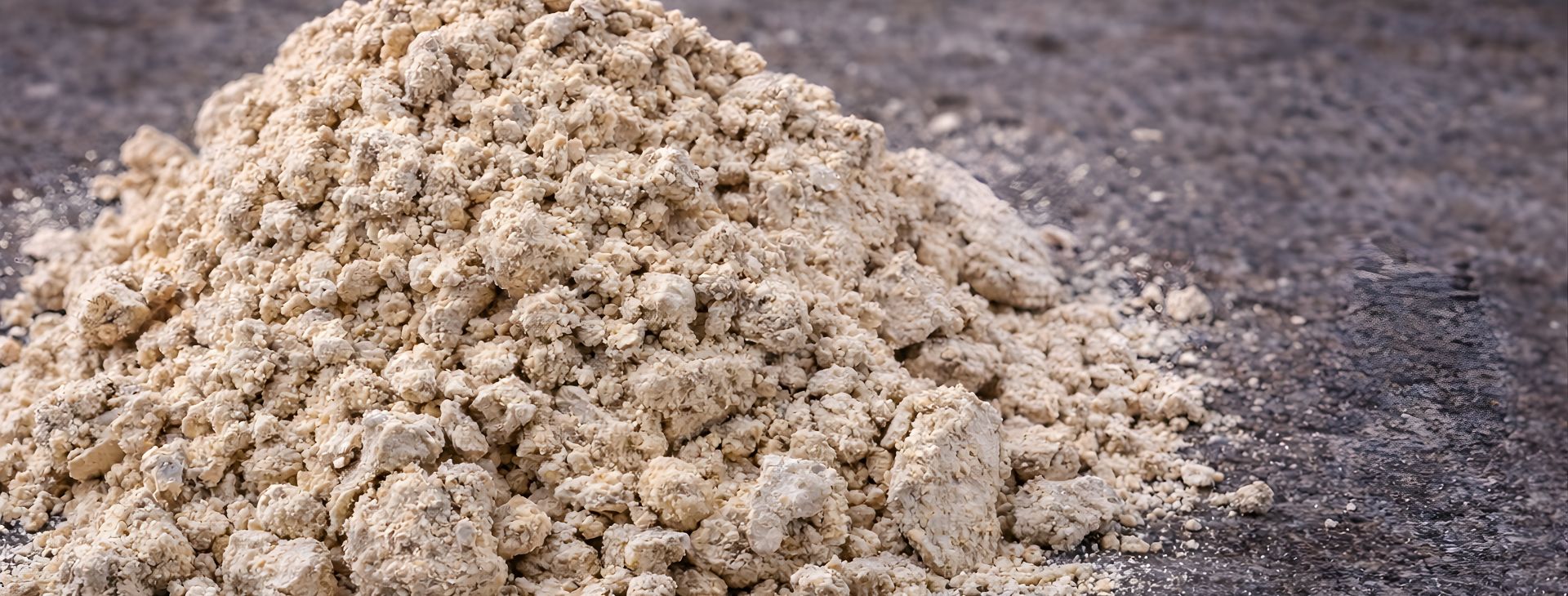
Bleaching Earth is an activated adsorbent clay, typically derived from bentonite or attapulgite, and processed through controlled acid activation. This treatment significantly increases surface area, porosity, and adsorption efficiency, making bleaching earth indispensable in edible oil refining and chemical purification.
It is primarily used to remove color bodies, oxidation products, trace metals, soaps, and residual impurities, helping refiners meet stringent quality, safety, and color specifications.

Edible Oil Refining: Used during bleaching to improve: Oil color, Oxidative stability, Flavor and shelf life

Food & Feed Processing: Applied in oil purification processes to meet food safety standards.

Lubricants & Petrochemicals: Purifies: Transformer oils, Hydraulic oils, Industrial lubricants.

Chemical Processing: Removes trace catalysts, colorants, and degradation products.

Sugar Industry: Used for decolorization and clarification of sugar syrups.

Biodiesel Production: Pre-treats feedstocks by removing gums and pigments.
Our capabilities include:
Q: What is bleaching earth used for?
A: It is used to purify and decolorize oils and chemicals by adsorbing unwanted impurities.
Q: How does activated clay work?
A: Its porous surface attracts and binds pigments, metals, and oxidation products from oils.
Q: Can bleaching earth be reused?
A: Typically, it is a consumable material. Limited regeneration may be possible but is not common.
Q: Is bleaching earth safe for edible oil refining?
A: Yes, bleaching earth is processed to remove activation residues and complies with regulatory standards.
Q: What is the typical dosage?
A: Usually 0.5–5.0% of oil weight, depending on oil quality and desired purity.
Applications
Let's get in touch and explore business opportunities
Connect With Us